Fleet charging infrastructure
Charging infrastructure that fits the operation
Fleet electrification stands or falls on charging. We analyse the operation, calculate the charging demand and design infrastructure that supports daily operations without a grid connection larger than it needs to be.
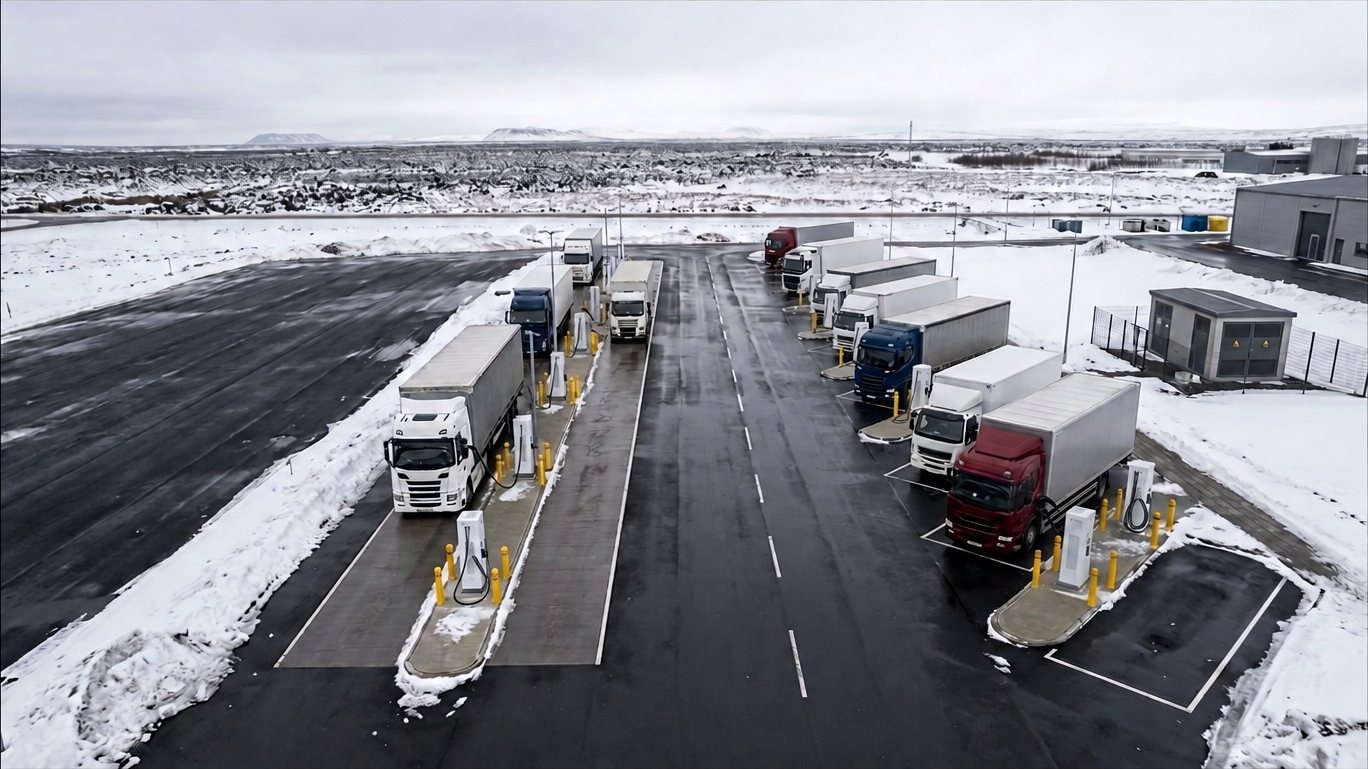
Who it is for
Haulage companies, bus operators, municipalities and anyone running trucks, buses or vans and switching to electric.
What we do
- Analyse energy and power demand from real driving and dwell times
- Set up a charging schedule: when, for how long and at what power
- Decide the number and power of chargers, AC and DC
- Size the grid connection and handle the dialogue with the grid operator
- Design the infrastructure: equipment layout on site, transformer stations, cable routes and electrical design
- Assess shared use with public charging where it makes sense
What you get
A design report with power demand, charging schedule, drawings and cost estimate. A basis you can take straight to tender or construction.
- The right chargers, in the right size
- How many chargers are needed and the power of each one.
- Electrify now, not when the grid catches up
- How much of the fleet the existing connection can already carry.
- Every departure, fully charged
- Vehicles charged and pre-heated before the first trip, summer and winter, planned around the timetable.
- Lower power costs, every year
- A lower peak means a smaller connection and lower capacity charges.
- Room to grow
- How many more vehicles the depot can take, and when more capacity is needed.
- Ready for the bad day
- How the operation copes when a charger fails or a vehicle returns late, and how much margin there is.
Phased build-out
The grid connection is sized for the final stage from the start, civil works and cable routes are done once, and chargers are added as vehicles arrive. The example below is from a real project for a haulage operator going from 2 to 20 electric trucks.
| Phase | Trucks | Peak power | Grid connection |
|---|---|---|---|
| Now | 2 | about 70 kW | 315 A |
| In 2 years | 4 | about 135 kW | 315 A |
| Full fleet | 20 | about 525 kW | 900 A |
35 kW per connector is enough overnight. Civil works are done once, for the final stage.
Resilience
We test what happens when a charger fails or a vehicle returns late, and how much margin there is before the first departure of the morning is affected.
What you provide
- Timetable or shift plan
- Fleet data: battery size and usage
- Site plan of the depot
- Electricity tariff
No measurements are needed for a first answer. Most of the work is done remotely and the results are presented in an online meeting.
Get in touch
Send us a timetable and fleet data and we will assess the charging demand. No measurements are needed for a first answer.
Get in touchRelated projects
Regional haulage operator
From 2 to 20 electric trucks in three phases
Power requirements and phased build-out of charging infrastructure for a haulage operator electrifying its truck fleet step by step. One charging site at the main depot serves the whole fleet.
2 → 4 → 20 trucks · 315 A → 900 A
Strætó bs. and Kynnisferðir
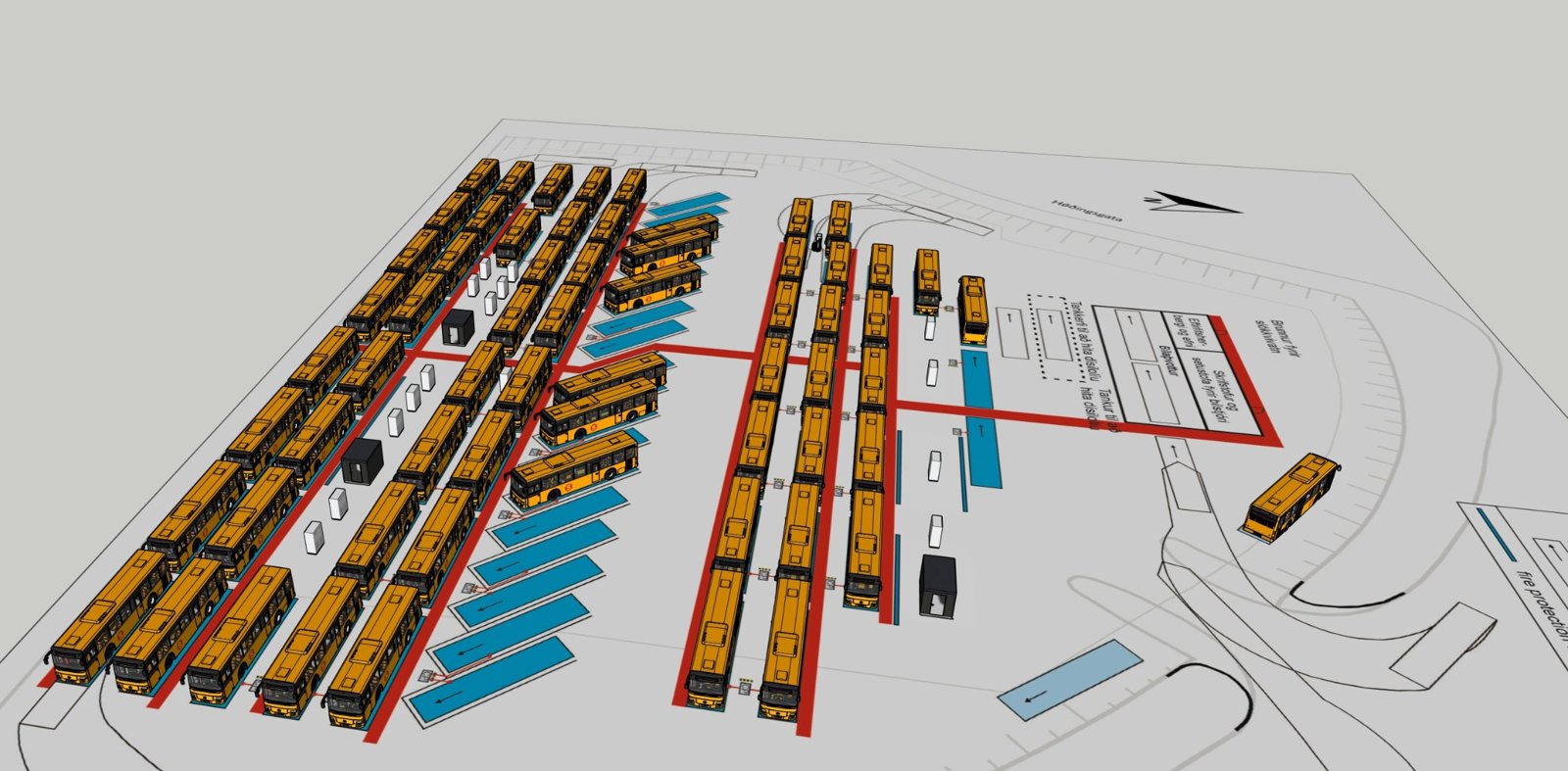
Depot charging infrastructure for 70 electric buses
Design of depot charging infrastructure for 70 electric buses, with 3.5 MW of power, on-site high-voltage distribution and three transformer stations. The work laid the technical basis for procurement.
3.5 MW · 70 buses · 3 transformer stations

Auðbert og Vigfús Páll ehf.
Truck fleet charging and public fast charging
Charging infrastructure for electrifying a truck fleet, designed so the same installation also serves as public fast charging for travellers and buses at a busy stop on Iceland's south coast.
Fleet + public charging
Electrifying a fleet?
The first conversation is short and without obligation. Send us a line and we will work out what is needed.
Send an email- enord@enord.is
- Phone
- 840 4935
- Hrafn Leó Guðjónsson
- Location
- Reykjavík, Iceland